Combined therapy of statins and shrimp wing oil in mixed dyslipidemia

 5 MIN
5 MIN  ALMAGEA
  10.01.2024
5 MIN ALMAGEA 10.01.2024
Dyslipidemia is recognized as a leading risk factor for the development of cardiovascular disease, and current guidelines focus on lowering LDL cholesterol. Statins are the first choice for lowering elevated LDL cholesterol levels, however, a new approach to treating dyslipidemia involves combining proven therapy with new natural therapeutic options.
Numerous scientific studies have shown that shrimp wing oil has a beneficial effect on human health.While fish oil contains biologically valuable omega-3 fatty acids EPA and DHA in the form of triglycerides or ethyl esters, shrimp wing oil contains phospholipid forms of EPA and DHA, mainly in the form of phosphatidylcholine. Their polar structure ensures greater bioavailability of EPA and DHA fatty acids compared to fish oil (1). An additional advantage of shrimp wing oil is the natural content of the antioxidant astaxanthin, which, among other things, increases the stability of omega-3 fatty acids and protects them from oxidation. Ingestion of fish oil often causes gastrointestinal side effects such as reflux, however, shrimp wing oil in the form of a dietary supplement, especially the one that comes in Licaps® capsules, does not leave a characteristic fishy smell and taste or reflux after consumption.
Shrimp wing oil has hypolipemic properties and has been shown to reduce serum triglycerides as well as total cholesterol and LDL cholesterol. Also, one of the benefits is that shrimp krill oil can increase HDL cholesterol (2). Epidemiological studies have shown that in addition to elevated LDL cholesterol, a low level of HDL cholesterol is an independent risk factor for the development of coronary heart disease. The level of HDL cholesterol is strongly inversely related to the rate of cardiovascular events (3).
Shrimp wing oil can lead to a moderate reduction in cardiovascular risk by improving endothelial function and increasing HDL cholesterol in people with type 2 diabetes who have a high incidence of cardiovascular disease (4). In the journal BMJ Open Diabetes Research & Care, in 2015, the results of a randomized double-blind study in which 47 subjects participated were published. In subjects who ingested shrimp wing oil for 4 weeks, there was an improvement in endothelial function and a decrease in C-peptide levels and the HOMA index compared to placebo (olive oil). The HOMA index model is an insulin resistance test that assesses the state of existing beta cell function and insulin sensitivity using data from fasting glucose and insulin levels.
A total of 34 subjects continued to consume shrimp wing oil for 17 weeks, and it was shown that in these subjects there was a significant improvement in endothelial function and an increase in HDL cholesterol.
In people with mixed dyslipidemia, after monotherapy with statins, persistent hypertriglyceridemia may occur, and elevated triglycerides are also an independent risk factor for the development of cardiovascular diseases (5).
U časopisu Nutrition Research 2014. godine objavljeno je istraživanje o utjecaju ulja račića krila na razinu serumskih triglicerida, a također su objavljeni i rezultati omega-3 indeksa kod ispitanika. Dvostruko slijepo, randomizirano kliničko istraživanje u kojem je sudjelovalo 300 ispitanika s visokom razinom triglicerida, tijekom 12 tjedana ispitivalo je 4 doze ulja račića krila (0,5 g, 1 g, 2 g ili 4 g), dok je placebo bilo maslinovo ulje. U usporedbi s placebom, ulje račića krila smanjilo je razinu triglicerida za 10,2%, a važno je naglasiti kako utjecaja na LDL kolesterol nije bilo. Najvažnije otkriće ovog istraživanja bio je upravo porast omega-3 indeksa u skupini koja je unosila ulje račića krila i to za 8, 18, 29 i čak 73% ovisno o uzimanoj dozi, dok je u skupini koja je unosila placebo došlo do smanjenja omega-3 indeksa za 3%.
Despite the fact that the researchers ultimately, for the sake of stronger statistical power of the test, analyzed the aggregate results of all four intervention groups that took shrimp wing oil regardless of the dose, we can conclude that the addition of shrimp wing oil can improve the triglyceride status, which makes it a good choice of supportive therapy in addition to statins with the aim of lowering multiple lipid abnormalities (6).
A 2018 systematic meta-analysis assessed the safety and efficacy of statin monotherapy and combination therapy with statins and omega-3 fatty acids in dyslipidemia. A total of 6 studies were included in the analysis, and the combination of 4 g of omega per day with 20-40 mg of statins was examined. The scientists concluded that the combination of statins and omega-3 fatty acids led to a significant reduction in the ratio of total cholesterol to HDL cholesterol. There was no difference in the level of LDL cholesterol in both groups, however, subjects who took statins in combination with high-dose omega-3 fatty acids had a significantly higher number of gastrointestinal side effects (7).
Kombinacija statina i omega-3 masnih kiselina poboljšava lipidni profil, no zbog pitanja sigurnosti, preporuka visokih doza omega-3 masnih kiselina nije ušla u kliničke smjernice utoliko što visoke doze omega-3 nisu uspjele dodatno sniziti LDL kolesterol koji je najvažniji čimbenik za prevenciju kardiovaskularnih bolesti i povezanih smrti. Stoga su niže dozirani pripravci omega-3 masnih kiselina poželjna prirodna terapijska opcija, poglavito zbog manjka gastrointestinalnih tegoba. Nadalje, učinku terapije lijekovima zasigurno doprinose i prednosti djelovanja omega-3 masnih kiselina iz ulja račića krila, a radi se o protuupalnom i antioksidacijskom djelovanju te sniženju razine triglicerida. Kombiniranje različitih pristupa snižavanja lipida povećava šanse za postizanje boljeg lipidnog profila pojedinca te je stoga usporedna primjena statina i ulja račića krila preporučljiva kardioprotektivna strategija (8).
When thinking about which additional natural active substance to introduce in therapy with the aim of lowering elevated blood lipids, along with statins, omega-3 fatty acids in the form of shrimp wing oil are imposed as a logical, safe and effective choice precisely because of additional improvements in lipid status without the need for laboratory tests and without side effects (9).
Literature:
1. Köhler A, Sarkkinen E, Tapola N, Niskanen T, Bruheim I Bioavailability of fatty acids from krill oil, krill meal and fish oil in healthy subjects–a randomized, single-dose, cross-over trial. Lipids Health Dis. 2015 Mar 15; 14():19.
2. Zhu JJ, Shi JH, Qian WB, Cai ZZ, Li D.Effects of Krill Oil on serum lipids of hyperlipidemic rats and human SW480 cells. Lipids Health Dis 2008 29;7(1):30-22.
3. Brown WV. “Novel approaches to lipid lowering: What is on the horizon?” Am J Cardiol 2001;87(5A):23B-7B
4. Lobraico JM1, DiLello LC1, Butler AD1, Cordisco ME1, Petrini JR1, Ahmadi R Effects of krill oil on endothelial function and other cardiovascular risk factors in participants with type 2 diabetes, a randomized controlled trial. BMJ Open Diabetes Res Care. 2015 Oct 14;3(1):e000107
5. Davidson MH, Stein EA, Bays HE, Maki KC, Doyle RT, Shalwitz RA, Ballantyne CM, Ginsberg HN, COMBination of prescription Omega-3 with Simvastatin (COMBOS) Investigators. Clin Ther. 2007 July; 29(7):1354-67.
6. Berge K, Musa-Veloso K, Harwood M, Hoem N, Burri L Krill oil supplementation lowers serum triglycerides without increasing low-density lipoprotein cholesterol in adults with borderline high or high triglyceride levels. Nutr Res. 2014 Feb; 34(2):126-33.
7. Choi HD, Chae SM.Comparison of efficacy and safety of combination therapy with statins and omega-3 fatty acids versus statin monotherapy in patients with dyslipidemia: A systematic review and meta-analysis. Medicine (Baltimore). 2018;97(50):e13593.
8. Devasia T et al. Efficacy and safety of a combination therapy of atorvastatin and krill oil versus atorvastatin and niacin in dyslipidemia: a randomized, open, and comparator study. Int J Basic Clin Pharmacol. 2014 Feb;3(1):201-205
9. Nambi, V., Ballantyne, C.M. Combination Therapy with Statins and Omega-3 Fatty Acids Am J Cardiol 2006; 98(4):34-38
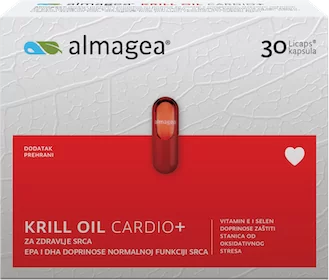
Omega-3 fatty acids are necessary for the normal functioning of the whole organism.
23.97 €


Get to know us
Dietary supplements
Information
Let's connect
© 2024. Almagea d.o.o., Ulica Julija Knifera 4, 10 020 Zagreb
Fixed conversion rate: €1 = HRK 7.5345
kupuj brzo i sigurno