

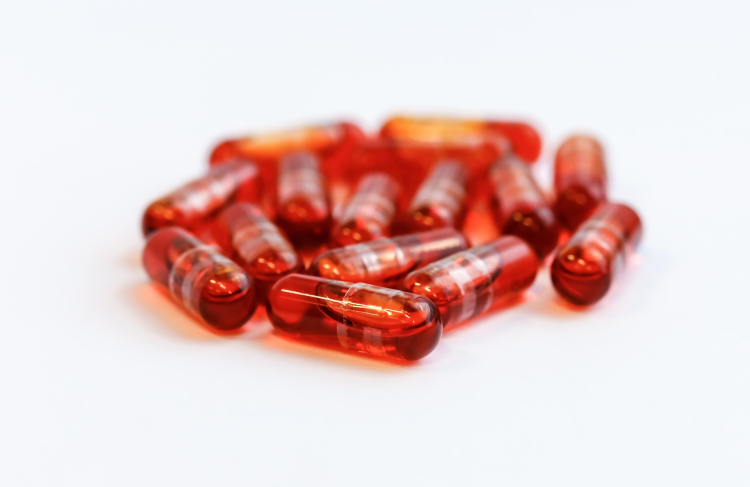
Prehrambene masti i prevencija steatoze jetre – novi uvid u utjecaj ulja račića krila

 7 MIN
7 MIN  ALMAGEA
  15.01.2024
7 MIN ALMAGEA 15.01.2024
Non-alcoholic fatty liver disease (NAFLD) is a condition caused by the accumulation of fat in the liver, whereby in a large number of patients, fatty liver is associated with obesity, type 2 diabetes, insulin resistance and other metabolic disorders such as hypertension and dyslipidemia - that is, a condition we call metabolic syndrome (MetS).
Population studies have shown that NAFLD is probably the cause of increased mortality, and it is estimated that it affects 10 to 35% of the world's population. Fatty liver develops in people whose alcohol intake is not significant (< 10 g per day for women and < 20 g for men). It is characterized by histological changes that include the amount of fat in the liver (greater than 5%) and other changes in the liver tissue that vary from inflammation to apoptosis and necrosis of liver cells to fibrosis, that is, the accumulation of connective tissue in the liver in response to damage.Nonalcoholic steatohepatitis (NASH) is a dangerous form of this disease because it increases the risk of developing progressive liver disease.

The prevalence of fatty liver increases with increasing obesity, and both processes are closely related to insulin resistance. The normal amount of fat in the liver is less than 5%. In healthy liver cells, energy obtained through food from glucose, fructose and lipids is stored in the form of glycogen, while excess lipids are distributed to peripheral tissues and stored in the form of adipose tissue. In fatty liver disease, the process of storing adipose tissue is disturbed and there is an increased accumulation of fat in the liver cells, mainly saturated fat. Exposure of cells to saturated free fatty acids leads to cell damage, oxidative stress and inflammation.Among other things, the development of fatty liver disease occurs due to de novo lipogenesis, that is, the conversion of excess carbohydrates into fat and their storage in adipose tissue. It is known that certain dietary factors affect lipogenesis in the liver, such as the composition of fatty acids in the diet.
For now, there is no adequate therapy for NAFLD, therefore there is an urgent need to find an effective and safe therapy. Research results show that omega-3 fatty acids can have a beneficial effect on conditions associated with metabolic syndrome. Shrimp wing oil has a rich content of omega-3 fatty acids, i.e. EPA and DHA, which are bound to phospholipids.Research shows that in phospholipid form, these fatty acids have better absorption and a higher degree of incorporation into target tissues than methyl and ethyl esters or triglycerides of omega-3 fatty acids, which are usually found in fish oil.
The beneficial effect of shrimp wing oil has been proven in numerous laboratory studies. Shrimp wing oil in dietary supplement form was found to help with enlarged liver and hepatic steatosis in mice fed a high-fat diet. Shrimp wing oil reduced liver weight and liver fat content. It is believed that the mechanism of action begins with the reduction of the action of a certain mitochondrial protein, which results in a reduction of the amount of available substrate for the synthesis of fatty acids in the liver. Also, shrimp wing oil reduces the action of lipogenic enzymes (fatty acid synthase and acetyl CoA carboxylase), which leads to a strong inhibition of fat synthesis in the liver. A similar effect of shrimp krill oil was recorded in mice fed a normal diet, indicating that shrimp krill oil has the ability to reduce hepatic lipogenesis.
In addition, a significant increase in fatty acid oxidation was observed in animals fed a diet enriched with shrimp wing oil. In other words, shrimp wing oil in animals stimulates the consumption of excess fat ingested with a high-calorie diet and inhibits the synthesis of fatty acids, thus preventing the development of fatty liver disease.
Važno je naglasiti kako višak energije koji osiguravaju masti često dovodi do smanjenja iskorištavanja glukoze u tkivima dovodeći do hiperglikemije i hiperinzulinemije. Otkriveno je kako ulje račića krila može poništiti povećanje razine glukoze i inzulina koji se javlja kod životinja sa steatozom jetre prevenirajući inzulinsku rezistenciju. S druge strane, niža razina triglicerida zabilježena je u plazmi životinja koje su u prehrani dobivale ulje račića krila u usporedbi sa životinjama koje ga nisu dobivale, što može biti važno za prevenciju kardiovaskularnih bolesti.
A review study published in 2016 in the professional journal Metabolic Syndrome and Related Disorders analyzed clinical research published up to that time on the impact of omega-3 fatty acids on non-alcoholic fatty liver disease. Out of a total of 17 analyzed studies, 13 of them noted that the intake of omega-3 fatty acids reduces liver steatosis, the level of liver enzymes and markers of inflammation. Four studies showed that omega-3 fatty acids can reduce hepatocyte degeneration, while two studies showed a reduction in fibrosis.
Osim ovih korisnih masnih kiselina, ulje račića krila izvor je i kolina i astaksantina. Kolin je esencijalni nutrijent koji je potreban za funkcioniranje jetre. Upravo zbog karakteristika poput omega – 3 masnih kiselina, kolina i antioksidansa astaksantina, ulje račića krila ima veliki potencijal za povoljno djelovanje kod osoba s masnom jetrom.
Author: Vitaminoteka nutritionist team
Literature:
1. Ramprasath, V.R., Eyal, I., Zchut, S., Jones, P.J.H. Enhanced increase of omega-3 index in healthy individuals with response to 4-week n-3 fatty acid supplementation from krill oil versus fish oil. Lipids Health Dis. 2013 12: 178.
2. Ferramosca A, Zara V. Modulation of hepatic steatosis by dietary fatty acids. World J Gastroenterol. 2014 Feb 21;20(7):1746-55.
3. Tiniakos DG, Vos MB, Brunt EM. Nonalcoholic fatty liver disease: pathology and pathogenesis. Annu Rev Pathol. 2010;5:145-71.
4. Kelley, N. S. Treatment of Nonalcoholic Fatty Liver Disease with Long-Chain n-3 Polyunsaturated Fatty Acids in Humans. Metab Syndr Relat Disord. November 2016, 14(9): 417-430.
5. Burri, L., Johnsen, L. Krill Products: An Overview of Animal Studies. Nutrients. 2015, 7(5), 3300-3321.
Omega-3 fatty acids are necessary for the normal functioning of the whole organism.
23.97 €


Get to know us
Dietary supplements
Information
Let's connect
© 2024. Almagea d.o.o., Ulica Julija Knifera 4, 10 020 Zagreb
Fixed conversion rate: €1 = HRK 7.5345
kupuj brzo i sigurno 