


The role of omega-3 fatty acids in inflammatory processes

 5 MIN
5 MIN  ALMAGEA
  15.01.2024
5 MIN ALMAGEA 15.01.2024
Today, it is considered that inflammatory processes in the body significantly contribute to the development of numerous chronic diseases. By studying omega-3 fatty acids, it was established that they have an impact on the suppression of inflammatory processes. The mechanism of action involves a change in the transcription of key inflammatory genes. In addition, omega-3 fatty acids compete with omega-6 fatty acids for the same enzymes, thereby synthesizing fewer inflammatory mediators. Omega-3 fatty acids have another advantage, which is that they can be converted into anti-inflammatory molecules such as resolvins, protectins and endocannabinoids.
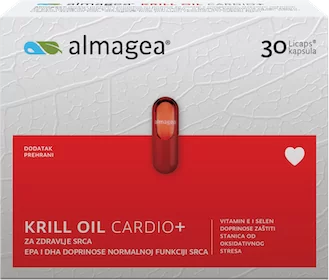
Sitni morski račić latinskog naziva Euphausia superba već više od desetljeća intrigira znanstvenu zajednicu zbog sadržaja omega-3 masnih kiselina koje su u ulju krila dostupne u posebnom obliku. U ulju krila, glavnina EPA (eikosapentaenska) i DHA (dokosaheksaenska) vezana je na fosfolipide, posebice fosfatidil kolin. Tako vezane masne kiseline učinkovito se prenose po tijelu i ugrađuju u stanične membrane. Kada EPA i DHA postanu dijelom stanične membrane, mogu utjecati na fluidnost, signalne i metaboličke procese u stanici.
The chemical form of omega-3 fatty acids is also suitable when it comes to absorption from the digestive system, because phospholipids of fatty acids do not require bile salts for digestion - they spontaneously form micelles, are soluble in water and thus have easier absorption.
Several studies have compared the effects of krill oil and conventional fish oil preparations, and the results systematically indicate better bioavailability of krill oil.When comparing the level of EPA and DHA in these preparations, it is concluded that almost twice the lower dose of EPA+DHA from krill oil is needed compared to omega-3 fatty acids from fish oil for the same or better effect.
The beneficial effects of krill oil mostly come from the polyunsaturated fatty acids EPA and DHA, however, the oil also contains vitamins A and E, the red pigment astaxanthin, a special type of flavonoid, and phosphatidyl-choline, all substances with antioxidant activity. Therefore, shrimp wing oil has a dual role - anti-inflammatory action established for the content of EPA and DHA, but also antioxidant action.
Author: Vitaminoteka nutritionist team
Literature:
1. Calder PC. Polyunsaturated fatty acids and inflammatory processes: New twists in an old tale. Biochemistry.2009;91:791–795.
2. Calder PC. Dietary modification of inflammation with lipids. Proc NutrSoc. 2002;61:345–358.
3. Serhan CN, Gotlinger K, Hong S, Arita M. Resolvins, docosatrienes, and neuroprotectins, novel omega-3-derived mediators, and their aspirin-triggered endogenous epimers: an overview of their protective roles in catabasis. Prostaglandins Other Lipid Mediat. 2004;73:155–172.
4. Ramprasath, V.R., Eyal, I., Zchut, S., Jones, P.J.H. Enhanced increase of omega-3 index in healthy individuals with response to 4-week n-3 fatty acid supplementation from krill oil versus fish oil. Lipids Health Dis. 2013 12: 178
5.Ulven SM, Kirkhus B, Lamglait A, Basu S, Elind E, Haider T, Berge K, Vik H, Pedersen JI: Metabolic Effects of Krill Oil are Essentially Similar to Those of Fish Oil but at Lower Dose of EPA and DHA, in Healthy Volunteers. Lipids 2011, 46(1):37-46.
6. Winther B, Hoem N, Berge K, Reubsaet L: Elucidation of Phosphatidylcholine Composition in Krill Oil Extracted from Euphausia superba. Lipids 2010, 46(1):25-36.
Omega-3 fatty acids are necessary for the normal functioning of the whole organism.
23.97 €


Get to know us
Dietary supplements
Information
Let's connect
© 2024. Almagea d.o.o., Ulica Julija Knifera 4, 10 020 Zagreb
Fixed conversion rate: €1 = HRK 7.5345
kupuj brzo i sigurno 