


Inflammatory bowel diseases, omega-3 fatty acids and shrimp wing oil

 5 MIN
5 MIN  ALMAGEA
  16.01.2024
5 MIN ALMAGEA 16.01.2024
Over the last few decades, the role of fats in modulating inflammatory processes has become increasingly clear. It is known that certain types of fats, especially those we call omega-3, have an anti-inflammatory effect, and therefore great hopes are placed on the use of these types of fats in various inflammatory diseases.
When it comes to inflammatory bowel diseases, epidemiological evidence is known about the quality and proportions of fat in the diet and the connection with the occurrence of inflammatory bowel diseases. For example, a study conducted in Japan indicated a correlation of increased frequency of Crohn's disease and increased intake of animal protein, total and animal fats, especially omega-6 polyunsaturated fatty acids.The penetration of the Western diet into the traditional diet of the Japanese led to a disruption of the ratio between omega-3 and omega-6 fatty acids, and several studies indicated the anti-inflammatory effect of omega-3 fatty acids in inflammatory bowel diseases through the modulation of the synthesis of proinflammatory cytokines.
Since in Crohn's disease and ulcerative colitis there are inflammatory changes in the intestine, the anti-inflammatory effect of omega-3 unsaturated fatty acids originating from northern sea fish and shrimp wing oil can benefit patients. EPA (eicosapentaenoic acid) and DHA (docosahexaenoic acid) supplementation is recommended.A three-year study published in the "Journal of Gastroenterology" showed that patients with Crohn's disease who consume a diet rich in omega-3 fatty acids have a significantly lower rate of disease relapse than patients who do not consume fish from the northern seas, i.e. omega-3 fatty acids. Salmon, tuna, herring and sardines are rich sources of EPA and DHA.
Furthermore, several studies have shown that fish oil, or omega-3 fatty acids, reduces inflammation and the need for anti-inflammatory drugs and promotes the achievement of adequate body mass in ulcerative colitis patients. The studies used relatively high doses of EPA and DHA, ranging between 2 and 3 grams.
Kril odnosno njegovo ulje posljednjih je godina u središtu interesa znanstvene zajednice. Riječ je o sitnom morskom račiću koji obitava u vrlo hladnim vodama Antarktika, a hrani se planktonima i mikroskopskim algama koje proizvode omega-3 masne kiseline. Zahvaljujući takvoj prehrani kril akumulira važne višestruko nezasićene masne kiseline (poglavito eikozapentaensku, EPA i dokozaheksaensku, DHA kiselinu) koje se obilato zastupljene u ulju krila. Specifičnost ulja krila nije samo sadržaj, već i način dostupnosti omega -3 masnih kiselina. EPA i DHA u ulju krila su, naime, vezane na fosfolipide što omogućuje bolju apsorpciju i iskorištenje od omega-3 masnih kiselina vezanih u trigliceride kakve su prisutne u ribljem ulju. Samim time ulje krila potrošačima nudi alternativu ribljem ulju i dodatnu prednost u vidu uzimanja manjih doza za ispoljavanje povoljnog učinka.
Kril na norveškom zapravo znači „hrana za kitove“, što pojašnjava položaj krila u hranidbenom lancu. Budući da se nalazi nisko u lancu, obitava u kristalno čistom moru Antarktika i općenito ne živi dugo, nema rizika od nakupljanja teških metala i drugih nečistoća u ulju krila. Na Antarktiku se biomasa krila sakuplja uz pomoć posebno projektiranih brodova, mreža i sustava koji omogućuju nježno ubiranje kako bi se maksimalno očuvala bioraznolikost i polazna supstanca za ulje bogato omega-3 masnim kiselinama.
Krill oil has attracted the attention of scientists for a little over ten years, and two years ago the first study was published that dealt with the issue of inflammatory bowel diseases.
Namely, unlike fish oil, shrimp oil contains omega-3 fatty acids astaxanthin, vitamins A and E and a special type of flavonoid (6,8-di-C-glucosyl-luteolin), all substances with antioxidant activity. Therefore, shrimp wing oil has a dual role - anti-inflammatory action established for the content of EPA and DHA, but also antioxidant action. Both actions can be beneficial for patients with inflammatory bowel diseases. Therefore, the use of this natural, superior source of omega-3 fatty acids should also be considered in patients with inflammatory bowel diseases.
Author: Prof. Dr.Sc. Darija Vranešić Bender, clinical nutritionist
Literature:
1. Tragnone A, Valpiani D, Miglio F, Elmi G, Bazzocchi G, Pipitone E et al. Dietary habits as risk factors for inflammatory bowel disease. Eur J Gastroenterol Hepatol 1995; 7(1):47-51.
2. Shoda R, Matsueda K, Yamato S, Umeda N. Therapeutic efficacy of N-3 polyunsaturated fatty acid in experimental Crohn’s disease. J Gastroenterol 1995; 30 Suppl 8:98-101.
3. Grimstad T1, Bjørndal B, Cacabelos D et al. Dietary supplementation of krill oil attenuates inflammation and oxidative stress in experimental ulcerative colitis in rats. Scand J Gastroenterol. 2012 Jan;47(1):49-58.
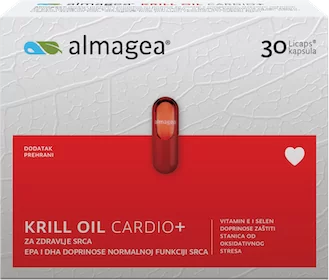
Omega-3 fatty acids are necessary for the normal functioning of the whole organism.
23.97 €


Get to know us
Dietary supplements
Information
Let's connect
© 2024. Almagea d.o.o., Ulica Julija Knifera 4, 10 020 Zagreb
Fixed conversion rate: €1 = HRK 7.5345
kupuj brzo i sigurno 