


Effect of shrimp wing oil on mood, concentration and memory

 5 MIN
5 MIN  ALMAGEA
  16.01.2024
5 MIN ALMAGEA 16.01.2024
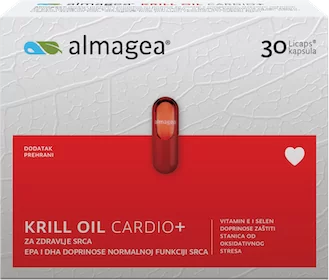
Krill is a small shrimp-like crustacean that is widely distributed in the oceans and is one of the most durable creatures in the world.Antarctic krill (Euphausia superba) is a species that lives in the coldest seas. Shrimp wing cell membranes contain a high proportion of docosahexaenoic (DHA) and eicosapentaenoic (EPA) fatty acids, which enable the cells to function at temperatures below freezing.
Scientists from various fields of interest have proven that omega-3 unsaturated fatty acids have a significant effect on physiological functions. Animal and human studies, as well as epidemiological studies, have shown that omega-3 fatty acids effectively increase the ability to learn, improve memory and cognitive functions. Additionally, it has been reported that EPA and DHA can reduce the risk of developing Alzheimer's disease.
Unlike fish oil in the form of a dietary supplement, shrimp wing oil contains DHA and EPA fatty acids bound to phospholipids, especially phosphatidylcholine.The krill-phospholipid molecular fraction also contains the powerful antioxidant astaxanthin.
Evidence collected through epidemiological, laboratory and clinical research indicates that the types of dietary fat affect susceptibility to the phenomenon itself and the consequences of mood disorders. The connection between omega-3 fatty acids and depression was discovered about 30 years ago when several studies recorded a low status of omega-3 fatty acids in the body of people suffering from depression.
There are strong indications that the basis of the development of depression lies in the increased ratio of omega-6 to omega-3 fatty acids, which in Western countries is 20:1, instead of the recommended 3:1. In clinical trials, omega-3 fatty acids, taken in the form of a dietary supplement, have shown a beneficial effect.The mechanism of action of the mentioned fatty acids on the development of mental illnesses is explained through their incorporation into the phospholipid bilayer and the consequent influence on the fluidity of the cell membrane. An excess of omega-6 fatty acids in the body causes a greater production of pro-inflammatory cytokines, which leads to a change in membrane fluidity, which manifests itself in changes in enzymes, ion channels, receptor activity and neurotransmitter binding. For example, it has been proven that an increased ratio of omega-6 to omega-3 fatty acids reduces the fluidity of the membrane, which leads to a decrease in the binding of serotonin to the corresponding receptor.
The effect of shrimp wing oil on brain function was examined in a Japanese study published in 2013. 45 healthy respondents between the ages of 61 and 72 participated in the research and were divided into three groups. During the 12-week duration of the study, the first group consumed shrimp oil, the second group consumed medium-chain fatty acids as a placebo, and the third group consumed sardine oil rich in EPA and DHA fatty acids, but in the form of triglycerides. The test subjects consumed 1000 mg of each of the mentioned oils per day divided into 4 doses. The researchers measured changes in the concentration of oxyhemoglobin in the cerebral cortex during the performance of memory tasks and calculations.
The results showed that both shrimp wing oil and sardine oil had a beneficial effect on brain functions compared to placebo.Also, it was recorded that shrimp wing oil more effectively increased the concentration of oxyhemoglobin in the brain compared to sardine oil. Namely, brain activity is accompanied by changes in blood oxygenation, so when performing cognitive tasks in the prefrontal cortex, oxyhemoglobin increases and deoxyhemoglobin decreases. With aging, the function of the prefrontal cortex declines, and when performing cognitive tasks in the elderly, a smaller increase in oxyhemoglobin is recorded. The dorsolateral prefrontal cortex performs many functions including the mobilization of working memory. With aging, there is a decrease in regional blood flow, which causes the deterioration of brain functions.The results of this research showed that long-term intake of shrimp wing oil improves working memory by activating the dorsolateral prefrontal cortex in elderly people and thus prevents the decline of cognitive activities.
Valja naglasiti da povoljan učinak unosa omega -3 masnih kiselina na moždanu funkciju nije rezerviran samo za osobe starije dobi, već se pokazalo kako i kod zdravih mladih ljudi unos omega – 3 masnih kiselina u obliku dodatka prehrani poboljšava moždanu hemodinamiku tijekom izvođenja kognitivnih zadataka.
Author: Vitaminoteka nutritionist team
Literature:
1. Logan, A.C. Omega-3 fatty acids and major depression: A primer for the mental health professional. Lipids Health Dis. 2004; 3: 25.
2. Husted KS, Bouzinova EV. The importance of n-6/n-3 fatty acids ratio in the major depressive disorder. Medicine (Kaunas). 2016;52(3):139-47.
3. Konagai C, Yanagimoto K, Hayamizu K, Han L, Tsuji T, Koga Y. Effects of krill oil containing n-3 polyunsaturated fatty acids in phospholipid form on human brain function: a randomized controlled trial in healthy elderly volunteers. Clin Interv Aging. 2013;8:1247-57.
4. Jackson PA, Reay JL, Scholey AB, Kennedy DO. DHA-rich oil modulates the cerebral haemodynamic response to cognitive tasks in healthy young adults: a near IR spectroscopy pilot study. No. J Nutr. 2012;107: 1093–1098.
Omega-3 fatty acids are necessary for the normal functioning of the whole organism.
23.97 €


Get to know us
Dietary supplements
Information
Let's connect
© 2024. Almagea d.o.o., Ulica Julija Knifera 4, 10 020 Zagreb
Fixed conversion rate: €1 = HRK 7.5345
kupuj brzo i sigurno 