How to avoid the yo-yo effect after weight loss: the role of GLP-1 agonists, glucose regulation and nutritional supplements
 LIFESTYLE
  8 MIN
8 MIN  ALMAGEA
  13.03.2026
LIFESTYLE 8 MIN ALMAGEA 13.03.2026
Despite the many ways to lose weight available to us, many people find it difficult to lose extra pounds and maintain a healthy body weight. Weight loss is often not long-lasting, so weight gain and new attempts to lose weight occur. Research shows that 20% of people manage to lose weight, but only 2% manage to maintain and control their body weight. This cycle of losing and regaining weight is called the "yo-yo effect" and increases the risk of obesity and metabolic diseases. It is not yet completely clear how the yo-yo effect worsens health and metabolism during the weight regain phase, however some research shows that regardless of the type of diet, the yo-yo effect can:

GLP-1 agonisti danas se smatraju među najučinkovitijim lijekovima za liječenje pretilosti. Oni djeluju tako da usporavaju pražnjenje želuca, smanjuju apetit i reguliraju razinu glukoze u krvi, što rezultira značajnim gubitkom kilograma. Međutim, njihova dugoročna učinkovitost uvelike ovisi o pridržavanju terapije i o promjeni životnih navika. Kada se korisnici vrate starim prehrambenim obrascima, dolazi do povratka kilograma, što vodi prema neželjenom „jo-jo efektu“. Uz primjenu ovih lijekova vežu se i određene nuspojave. In addition to indigestion, an unwanted side effect of muscle mass loss can occur as a result of rapid weight loss, which makes it difficult to maintain metabolism and a desirable body composition.. Therefore, in order to successfully lose weight and maintain the desired body weight, it is necessary to persevere in treatment, learn to deal with side effects, adopt healthy eating and lifestyle habits, and strive to preserve and build muscle mass during weight loss, which does not sound easy at all, but is crucial for long-term success.
The level of glucose in the blood is a key factor in the regulation of appetite, but it is not only about one simple mechanism of action, but about a complex interplay of hormones, signals in the brain, and reactions of obtaining energy. Keeping the blood glucose level stable helps in regulating satiety and hunger hormones and, ultimately, in achieving an adequate feeling of satiety. Namely, when eating food that quickly raises the level of glucose in the blood, such as refined carbohydrates and simple sugars, the body converts them into glucose with rapid reactions, which leads to a state in the body that can be divided into three phases:

When it comes to hormones, insulin, in addition to regulating blood glucose levels, works by stimulating the storage of energy in the form of fat. Chronically high insulin (hyperinsulinemia), often present in insulin resistance, tells the body to store fat and makes it difficult to use stored fat for energy. It also appears to interfere with the brain's ability to receive satiety signals from other hormones. The stomach produces the "hunger" hormone ghrelin to stimulate appetite. It is common for ghrelin levels to drop after a meal. However, research shows that a drop in blood sugar and a high insulin response can prevent a corresponding drop in ghrelin, meaning we still feel hungry even after a meal with enough calories. In addition to ghrelin, there is also the "satiety" hormone leptin, which is released by fat tissue cells. Leptin tells our brain that we have enough energy stored and that we can stop eating.Chronically high insulin levels are the primary driver of leptin resistance. It is a condition when the brain no longer "hears" the leptin signal. So poor glucose control can directly block your body's most powerful “stop eating” signal.
A strategy for better glucose control and appetite regulation includes eating foods rich in fiber, especially soluble fiber from oats, legumes, apples, and vegetables, which slow down the digestion and absorption of carbohydrates. Instead of refined carbohydrates, you should choose foods with a lower glycemic index, such as quinoa, sweet potatoes, legumes and brown rice. Food rich in carbohydrates should be taken together with food rich in protein and fat, and it is important not to overdo it. In addition, nutritional supplements also help the body control blood glucose levels.

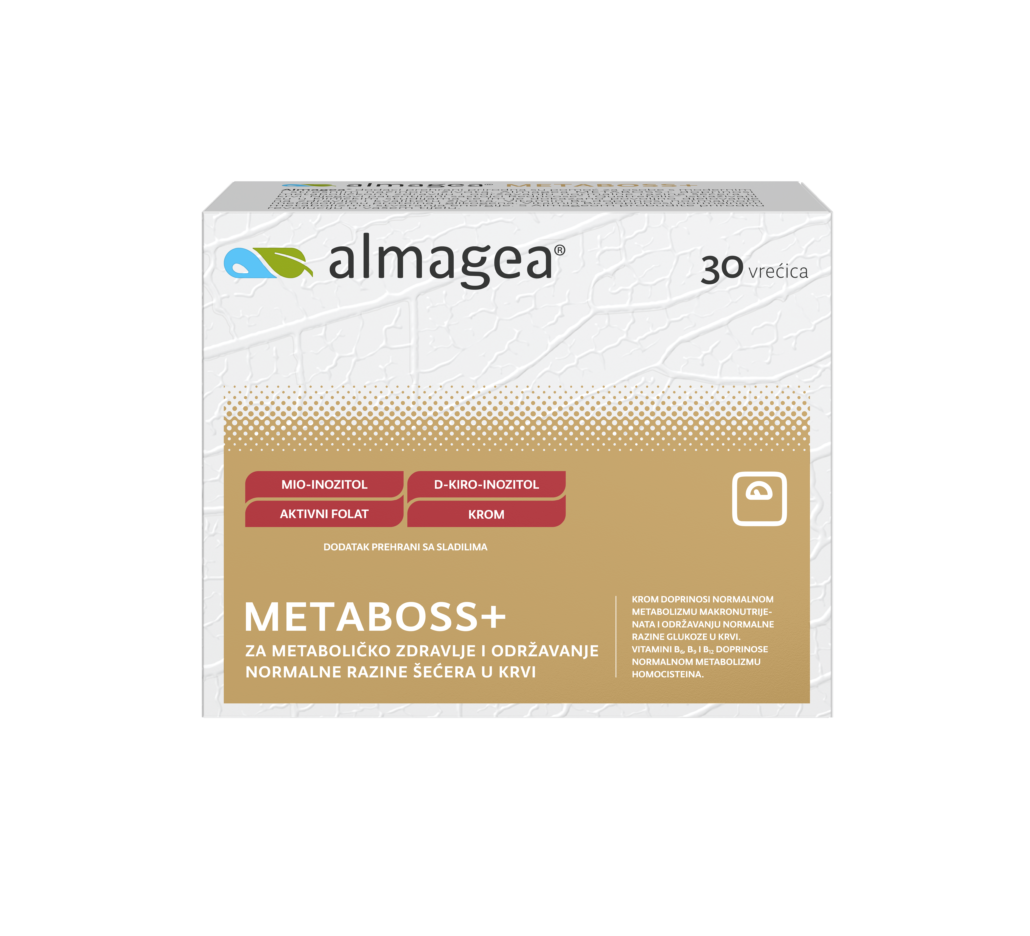
Almagea Metaboss+ is a dietary supplement that contributes to metabolic health and maintenance of normal blood sugar levels, and contains effective natural compounds - the patented ingredient Reducose™ from white mulberry leaf extract and myo- and chiro-inositol in an ideal ratio of 40:1. Metabolic processes are also facilitated by the presence of B vitamins6, B9 and B12 te aktivnog folata (Quatrefolic®) i kroma. Važno je naglasiti da su dodaci prehrani samo podrška u procesu regulacije razine šećera u krvi, smanjenju glukoznih „pikova“, postizanju dugotrajne sitosti i općenito tijekom mršavljenja, a da su uravnotežena prehrana i zdrav stil života nezamjenjivi kada govorimo o sprječavanju „jo-jo efekta“ i održavanju poželjne tjelesne mase bilo da smo željenu tjelesnu masnu postigli uz pomoć lijekova ili uz redukcijsku dijetu i tjelovježbu. Pravilna prehrana, redovita tjelovježba, dodaci prehrani, dovoljno sna i GLP-1 agonisti pomažu, ali održavanje poželjne tjelesne mase nakon terapije ovisi o dugoročnim navikama.
Literature:


Get to know us
Dietary supplements
Information
Let's connect
© 2024. Almagea d.o.o., Ulica Julija Knifera 4, 10 020 Zagreb
Fixed conversion rate: €1 = HRK 7.5345
kupuj brzo i sigurno