

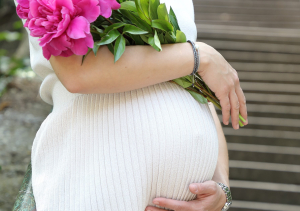
The most common doubts about nutrition during pregnancy
 LIFESTYLE
  10 MIN
  ALMAGEA
  17.07.2019
LIFESTYLE 10 MIN ALMAGEA 17.07.2019
Pregnancy is a very sensitive period in a woman's life, and the body goes through numerous physical and hormonal changes. In the desire to provide her child with all the necessary nutrients for proper growth and development, there are many questions, misconceptions and doubts that the expectant mother has when it comes to nutrition during pregnancy.
Every expectant mother spends months preparing for the birth of her baby.
In order to ensure enough energy for the rapid growth of the fetus, an additional 55,000 kcal must be consumed on average during pregnancy. Although at first glance this seems hard to imagine, calculated means that during the 2nd and 3rd trimester pregnant women need to provide 300 calories more daily than before conception. During the first trimester, there is no need for additional energy, except for pregnant women who entered pregnancy with depleted energy reserves. They are recommended to consume an additional 300 kcal every day during the entire pregnancy.
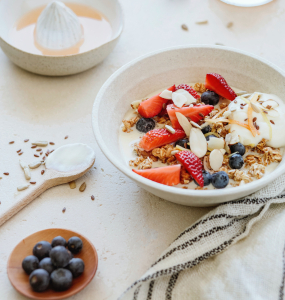
An additional 300 calories will approximately be provided by 2 ½ cups of skimmed milk, 100 g of ice cream or a bagel with cheese. Pregnant women are often tempted to "eat for two" or double the amount of food they normally consume. Apart from the fact that such procedures can result in excessive weight gain, there is no need for them. An additional 300 kilocalories is quite enough to provide the energy necessary for the healthy progress of pregnancy. Therefore, the motto of every future mother should not be "eat for two" but "eat quality".
Most studies do not support the exclusion of certain foods (including cow's milk and eggs) from the diet of pregnant women for the purpose of preventing atopic diseases. Previously published guidelines from the American Academy of Pediatrics (AAP) advised breastfeeding mothers who gave birth to children at high risk for developing allergies to avoid peanuts and tree nuts and to consider eliminating eggs, cow's milk and fish from the diet while breastfeeding. Namely, food allergens can be detected in mother's milk, and this especially applies to peanut, cow's milk and egg proteins.
Some studies have shown a beneficial effect of excluding foods such as eggs, milk and fish during breastfeeding, while other studies have not found any link between such a mother's elimination diet and the development of atopic diseases in infants.
Although the position of umbrella organizations for pediatric nutrition is that there is no evidence that a special diet during pregnancy and breastfeeding affects allergies in children, isolated studies that are published from time to time, which link certain dietary patterns with a higher frequency of allergies, should be taken into account. For example, a Dutch study found that children whose mothers ate peanuts, walnuts or hazelnuts daily during pregnancy had a 50% higher risk of asthma. The same research, conducted on 4,000 pregnant women, showed that more frequent consumption of fruit during pregnancy reduces the risk of asthma in children.
Također, studija objavljena prije nekoliko godina u časopisu Thorax pokazala je kako mediteranska prehrana majke štiti dijete od atopije. Unos povrća više od 8 puta tjedno, ribe 2 do 3 puta tjedno, te mahunarki barem jedno tjedno u budućih majki se pokazalo učinkovito u ublažavanju teškog disanja i simptoma atopije u djeteta. Nadalje, više recentnih studija pokazalo je da nutrition during pregnancy koja uključuje konzumaciju ribe štiti dijete od atopije.
Most experts agree that small amounts of caffeine are safe for pregnant women. Small amounts are defined as one to two cups of coffee per day. The safety of ingesting larger amounts is controversial. Some scientific studies have shown that high caffeine intake (more than 3 cups per day) can increase the risk of miscarriage or giving birth to a newborn with a low birth weight. However, there is not enough evidence to say with certainty that caffeine is responsible for pregnancy problems. In the absence of concrete knowledge, the safest thing for pregnant women is moderation in the consumption of coffee and other food sources of caffeine.
Artificial sweeteners are not completely prohibited during pregnancy. Namely, there is a whole series of sweeteners, some of which are completely safe, and some of which should be taken in limited quantities or completely eliminated during pregnancy.
Zaslađivači prisutni na hrvatskom tržištu čiji unos treba ograničiti tijekom trudnoće su: saccharin, cyclamate and acesulfame-K. It is thought that the artificial sweetener aspartame can be used in very small amounts during pregnancy. If there is no significant need for artificial sweeteners, it is better not to use them during pregnancy.
Although there is no universally accepted explanation, cravings for certain foods are quite normal and are experienced by almost two-thirds of all pregnant women. If you have a sudden craving for a certain food, feel free to reach for it as long as it provides energy and essential nutrients. However, if the desire for such food is constant and prevents you from taking in other essential nutrients, it is necessary to introduce more balance into the daily menu so that your diet during pregnancy is healthy.
It is possible that the taste of certain foods changes during pregnancy. It may happen that you suddenly do not prefer foods that you loved before pregnancy. In addition, during pregnancy, some women have a strong need to ingest inedible substances such as clay, chalk, soil, sand, ash, paper. Such a condition is called pika and can be a reflection of a nutritional deficit such as a lack of iron or zinc. It is important not to give in to such a desire because it can be dangerous for both you and your child. In such cases, it is best to consult a competent doctor.
If for any reason you have problems with the intake of balanced meals and proper weight gain, seek the help of a nutritionist and doctor.
Opinions still differ on this issue. While some doctors forbid a pregnant woman to eat and drink during labor, others consider it a common myth.
The main reason why the intake of liquids and food is prohibited is the possible need for general anesthesia. Namely, in the case of a surgical delivery, general anesthesia is used, which can lead to vomiting and inhaling part of the stomach contents into the lungs, which can cause serious complications. On the other hand, some doctors allow women to drink fluids and eat light meals during labor provided that general anesthesia is very unlikely to be necessary. It is believed that this way ensures good hydration of the pregnant woman and prevents fatigue.
It is certainly not a good idea to enter the active part of labor with a full stomach, because in that case the labor will be more difficult.
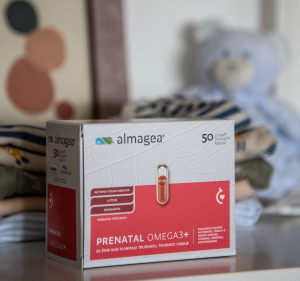
Izvori omega-3 masnih kiselina su ograničeni. Orašasti plodovi, sjemenke lana i njihovo ulje te ulje soje i repice su dobri izvori esencijalne alfa linolenske kiseline (ALA). Iako ljudski organizam ima sposobnost konverzije ALA u DHA i EPA nužne za pravilan razvoj mozga i živčanog tkiva fetusa, ta je pretvorba može biti ograničena i ne zadovoljava potrebe organizma. Stoga, ako vaša prehrana u trudnoći ne sadrži dovoljno ribe, posegnite za ribljim uljem, drugim plodovima mora te funkcionalnim proizvodima obogaćenim omega-3. Valja razmisliti i o suplementaciji s posebno osmišljenom formulacijom za pripremu za trudnoću, tijekom trudnoće i dojenja, poput Prenatal Omega3+.
The need for iron increases significantly during pregnancy, so it is sometimes difficult to meet the need for this important mineral without taking nutritional supplements. Women who enter pregnancy with sufficient iron stores can easily maintain a good iron status without supplements. It is enough to consume adequate amounts of food rich in iron, such as red meat, poultry, fish, eggs, whole grains, beans, and provide the body with enough vitamin C. If a woman enters pregnancy with low iron reserves and her diet is poor in iron and vitamin C, nutritional supplements become necessary.
Pregnant women should generally not limit their salt intake. Restriction of salt intake can be dangerous and is associated with low-quality nutrition, insufficient weight gain and the birth of low-birth-weight infants. In addition, there is no evidence that limiting salt intake helps reduce high blood pressure that develops during pregnancy. Moreover, limited salt intake can potentiate problems with blood pressure.
Although the diet during pregnancy must not contain an excessive dose of salt, pregnant women can add salt to their meals without fear. Many pregnant women will increase their desire for salt and salty dishes, which is completely normal.
Women who had high blood pressure before conception and partially controlled it by restricting salt intake should follow a diet that is somewhat less restrictive with regard to salt intake during pregnancy. In addition, it is desirable that they regularly check their blood pressure with the competent doctor.
Mercury pollution has turned some types of fish into potentially dangerous foods that can have a negative impact on the child's nervous system and are therefore not recommended during pregnancy and breastfeeding. Mercury is a heavy metal naturally present in the environment, and the main sources include the burning of fossil fuels and the disposal of ash in municipal waters. Mercury occurs in several forms, the most dangerous of which is methylmercury. In seas, lakes and rivers, mercury turns into methylmercury, which ends up in fish, especially large predators. Fish and fish products are the main, if not the only, source of methylmercury present in the human body.
In 2017, the US Food and Drug Administration, the FDA, published long-awaited specific guidelines for the safe intake of fish when it comes to nutrition during pregnancy. New in the American guidelines is the division of fish into three categories: best choice, good choice and species to avoid during pregnancy.
The list of fish and seafood that are safe and the best choice for pregnant and breastfeeding women includes: sardines, anchovies, hake, trout and shrimp.
These types of fish and seafood can be found in our sea and rivers, and pregnant and lactating women are recommended to consume them in the amount of 2 to 3 servings per week. It is important to note that one serving corresponds to approximately 120 grams of fish.
Nepasterizirano mlijeko i proizvodi od istog, uključujući meke, pljesnive ali i tvrde sireve, preporučuje se u potpunosti isključiti iz prehrane za vrijeme trudnoće jer postoji mogućnost od kontaminacije cijelog niza patogenih bakterija uključujući Listeriu, Salmonellu, E. coli te Campylobacter.
Homemade fresh cheese, which we find at the market, unfortunately can fall into the mentioned category. In contrast, fresh cheese bought in the supermarket is made from pasteurized milk and is completely safe for consumption. In order to avoid potential doubts about the choice of fresh cheese, as well as other foods, it is important to carefully study the declaration.

Get to know us
Dietary supplements
Information
Let's connect
© 2024. Almagea d.o.o., Ulica Julija Knifera 4, 10 020 Zagreb
Fixed conversion rate: €1 = HRK 7.5345
kupuj brzo i sigurno 
