


The heart at the center of the well-being philosophy: how do omega-3 acids support health from the inside?
 LIFESTYLE
  5 MIN
5 MIN  ALMAGEA
  01.09.2025
LIFESTYLE 5 MIN ALMAGEA 01.09.2025
U svijetu koji se neprestano ubrzava, zdravlje više nije samo odsustvo bolesti – ono je osjećaj ravnoteže, vitalnosti i jasnoće. Srce, kao naš najvažniji mišić, igra ključnu ulogu u tom holističkom konceptu zdravlja i wellbeing-and. It is therefore no surprise that omega-3 fatty acids are increasingly at the center of numerous health strategies – allies that work quietly but powerfully.
Unlike numerous trends in healthy eating that come and go, omega-3 fatty acids have been the subject of serious scientific research for decades. In the last few years, it has become increasingly clear: a high-quality and regular intake of EPA and DHA contributes not only to heart health, but also to a general sense of psychophysical well-being.
EPA and DHA, two key omega-3 fatty acids, have multiple beneficial effects on our body:
In addition, omega-3 acids reduce blood clotting - which is important in the prevention of strokes and heart attacks. In people who have already been diagnosed with cardiovascular disease, regular intake of EPA and DHA reduces the risk of repeated heart attacks, but also reduces mortality.

Traditionally, omega-3 fatty acids are obtained from fish oil, but recently attention has been increasingly drawn to Antarctic shrimp krill oil (Euphausia superba). Unlike fish oil, omega-3 acids from krill are bound to phospholipids - which makes them easily soluble in water and extremely acceptable to the human body.
This means better absorption, faster delivery into the bloodstream and more efficient integration into cell membranes, where omega-3 acids achieve their protective effect. It is interesting that an increase in the omega-3 index can be achieved in just a few weeks, which makes krill oil particularly effective and desirable in a preventive strategy.
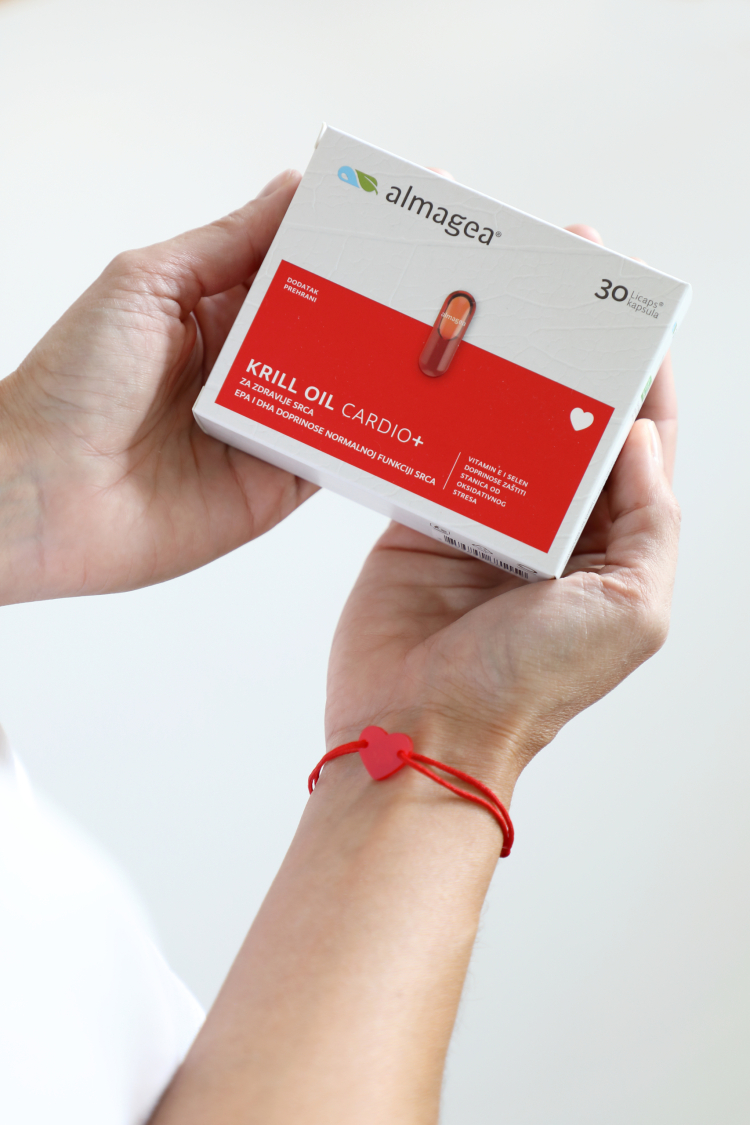
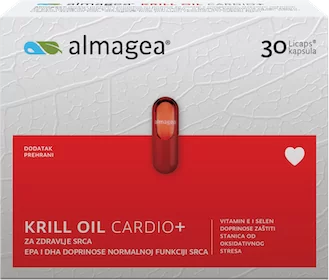
Upravo takav napredan oblik omega-3 kiselina nalazi se u proizvodu Almagea® Krill Oil Cardio+, a food supplement of the new generation. In addition to containing Superba2™ krill oil, this product combines:
Thanks to the synergy of natural and technological advantages, Almagea® Krill Oil Cardio+ not only works to prevent diseases, but actively supports the overall psychophysical state of the organism.
For whom is krill oil the ideal choice?
Whether you want to protect your health preventively, strengthen the cardiovascular system or simply improve your daily functioning - krill oil has something to offer:
It is important to point out that krill oil is safe for everyday use, except for people allergic to crustaceans. Take 1-2 capsules a day, with a meal and with enough liquid.
Heart health is not a matter of one decision, but of a series of daily choices. In this process, omega-3 fatty acids and antioxidants form the basis of long-term prevention and balance. Almagea® Krill Oil Cardio+, with its natural origin, sustainable production and scientific foundations, is a real ally for those who want to live with more energy, peace and health - from the heart, to the whole body.
During the first two weeks of September, on the occasion of World Heart Day, we have prepared a 20% discount for the purchase of Krill Oil Cardio+ products on the Almagea webshop. Take advantage of this promotional activity and ensure your supply of products, and delivery to the package machine is free for the purchase of 2 or more nutritional supplements.
Omega-3 fatty acids are necessary for the normal functioning of the whole organism.
23.97 €


Get to know us
Dietary supplements
Information
Let's connect
© 2024. Almagea d.o.o., Ulica Julija Knifera 4, 10 020 Zagreb
Fixed conversion rate: €1 = HRK 7.5345
kupuj brzo i sigurno 