

Why is it important to understand and improve your metabolic health?
 LIFESTYLE
  7 MIN
7 MIN  ALMAGEA
  26.06.2025
LIFESTYLE 7 MIN ALMAGEA 26.06.2025
Metabolizam je skup procesa kojima tijelo pretvara hranu u energiju kako bi nas održalo na životu i omogućilo normalno funkcioniranje. Sastoji se od brojnih kemijskih procesa koji se odvijaju u svim stanicama tijela svake sekunde. Na taj način se omogućuje disanje, kretanje, cijeljenje rana, ali i održavanje razine šećera u krvi stabilnom, uz dobru osjetljivost na inzulin. Ujedno, dobar metabolizam osigurava tijelu da učinkovito koristi masnoće te tako sprječava njihovo nakupljanje i debljanje. Dobra kontrola šećera u krvi temelj je zdravog starenja, dugovječnosti i dugotrajnog očuvanja vitalnosti.
The term metabolic dysfunction describes a metabolic disorder that develops gradually and over time leads to the development of metabolic syndrome. Components of metabolic dysfunction are increased waist circumference, elevated triglycerides, elevated fasting blood glucose, elevated blood pressure, low HDL cholesterol, and elevated total cholesterol. So, it can be said that we are metabolically healthy if all parameters of our metabolic health are within the normal range. Blood insulin level is not cited as a criterion of metabolic dysfunction because measuring insulin is impractical in clinical practice, and waist circumference is used instead because it has been shown to have a strong link with insulin resistance.

Insulin is a hormone produced by pancreatic cells when blood sugar levels are high. It works by slowing down the breakdown of fat (lipolysis) and the formation of glucose in the liver, and at the same time it stimulates the use of glucose as an energy source or storage in the liver, muscles and adipose tissue.
When adipose tissue becomes resistant to insulin, insulin can no longer prevent the breakdown of fat. This leads to an increase in free fatty acids in the blood, which further worsens insulin resistance. In muscles, free fatty acids interfere with insulin receptors and the use of glucose, causing blood glucose levels to rise. In the liver, free fatty acids promote the formation of glucose and fat, which can lead to fatty liver.
As a result of the cells becoming resistant to insulin, the body begins to produce more insulin to maintain normal sugar levels. But over time, this compensation fails, and free fatty acids further damage the cells of the pancreas that produce insulin.
The most problematic is visceral (internal) adipose tissue, located in the abdomen, which sends free fatty acids directly to the liver, which is why it has a stronger effect on insulin resistance than subcutaneous fat.
The increased amount of free fatty acids also stimulates the formation of cholesterol and triglycerides and the production of VLDL particles rich in fat. This lowers the level of good (HDL) cholesterol and creates small, dense LDL particles that increase the risk of atherosclerosis.
In addition, insulin resistance contributes to the development of high blood pressure because the ability of blood vessels to expand decreases, and free fatty acids further promote the narrowing of blood vessels. There is also increased activity of the nervous system and retention of sodium in the kidneys. All of this together increases the risk of heart disease and type 2 diabetes.
Anyone can develop insulin resistance, and the frequency in Europe is estimated to be 15.5%.
Among the main risk factors, the most common are obesity and excess body weight. Obesity and insulin resistance are linked in many ways, and insulin resistance can be an early sign of developing diabetes. However, metabolic disorders are unfortunately not exclusively related to the development of diabetes, but are also linked to the development of cancer, poor mental health and cognitive impairment. Therefore, it is important to be aware of problems with metabolic health in time and try to improve it.

By changing lifestyle and eating habits, it is possible to improve metabolic health and insulin sensitivity, and it is necessary to focus on:
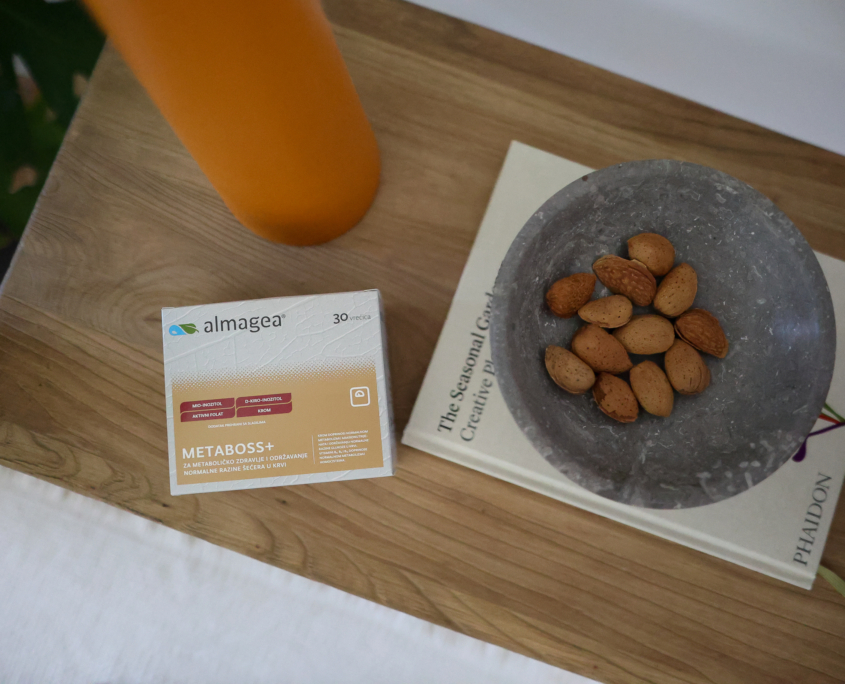
Mnogi biološki aktivni spojevi iz prirode mogu pomoći u povećanju osjetljivosti na inzulin i tako doprinijeti metaboličkom zdravlju. Almagea® METABOSS+ je dodatak prehrani koji sadrži kombinaciju nekoliko ključnih spojeva, uključujući i mio- i kiro- inozitol. Inozitol je tvar slična vitaminima B skupine koja se prirodno nalazi u tijelu i sudjeluje u brojnim metaboličkim procesima bitnim za održanje zdravlja.
Almagea METABOSS+ also contains patented ingredients: Reducose™ from white mulberry leaf extract and Quatrefolic®, i.e. active folate, which have been investigated in numerous clinical studies. From vitamins and minerals, Almagea METABOSS+ contains chromium, which contributes to the normal metabolism of macronutrients and the maintenance of normal blood glucose levels, and B vitamins6 and B12 koji doprinose normalnom metabolizmu proteina i glikogena i stvaranja energije te normalnom metabolizmu homocisteina koji igra važnu ulogu u zaštiti od kardiovaskularnih bolesti.
It is recommended to introduce Almagea METABOSS+ in combination with an adapted diet, exercise and with the implementation of relaxation techniques and sufficient sleep. Application involves taking 1 sachet per day dissolved in a glass of water, immediately before the meal that is the richest in carbohydrates, for easier maintenance of normal blood sugar levels and better metabolic health.



Get to know us
Dietary supplements
Information
Let's connect
© 2024. Almagea d.o.o., Ulica Julija Knifera 4, 10 020 Zagreb
Fixed conversion rate: €1 = HRK 7.5345
kupuj brzo i sigurno 