
Ulje račića krila i kurkumin – potporna terapija kod bolesti štitnjače

 7 MIN
7 MIN  ALMAGEA
  10.01.2024
7 MIN ALMAGEA 10.01.2024
The thyroid gland belongs to the group of glands with internal secretion, and is located in the front part of the neck in front of the trachea. This gland is responsible for the production and secretion of the hormones thyroxine (T4) and triiodothyronine (T3), which control metabolic processes and play a role in heat production. An important role in the regulation of thyroid function is played by the pituitary gland, which produces and secretes thyrotropin (TSH), a hormone that stimulates thyroid function.
In most cases, disorders of thyroid function are caused by autoimmune thyroid diseases.Autoimmune inflammation of the thyroid, that is, Hashimoto's or chronic thyroiditis, is characterized by the infiltration of the thyroid by lymphocytes and the deterioration of the thyroid tissue, which gradually leads to reduced thyroid function, that is, the development of hypothyroidism. Hypothyroidism is considered the most common thyroid disorder, and the frequency of occurrence increases with age.

Autoimmune thyroid diseases also cause hyperthyroidism, i.e. increased thyroid function. The disease is known as diffuse hyperthyroidism or Basedow's disease, and antibodies that encourage the thyroid gland to work harder are responsible for its occurrence. Hyperthyroidism appears at any age, and is most common in women aged 30 to 50.
Antarctic shrimp oil (Euphausia superba) is a source of omega-3 fatty acids; eicosapentaenoic (EPA) and docosahexaenoic (DHA) fatty acids. The specificity of EPA and DHA fatty acids in krill oil is a phospholipid form similar to the structure of EPA and DHA in human cells and cell organelles, which facilitates their absorption into target tissues (1).
When it comes to autoimmune thyroid diseases, such as Hashimoto's thyroiditis, it is known that chronic inflammation is present in the background of the disease.
Thyroid hormones play an important role in maintaining the homeostasis of the cardiovascular system, mainly influencing the function of the myocardium, vasodilatation, but also the function of the endothelium. Clinical evidence of the negative impact of thyroid disorders on the cardiovascular system is well documented. Thus, it is known that hypothyroidism can have an impact on heart muscle contractility, vascular resistance, blood pressure, and heart rhythm (3). Hyperthyroidism also causes disturbances in the work of the cardiovascular system, and in addition to tachyarrhythmias, the occurrence of systolic and diastolic dysfunctions has been recorded (4).
Hyperthyroidism is often associated with liver abnormalities. Results of research published in 2016.in the journal Pathophysiology showed that omega-3 fatty acids affect the reduction of oxidative stress, levels of TNF-α and interleukin 1β from the cytokine family in liver dysfunction caused by hyperthyroidism.
Thanks to the cardioprotective effect of omega-3 fatty acids, krill oil is a natural aid in the prevention and supportive therapy of cardiovascular diseases (1). Scientists explain the aforementioned therapeutic effect of omega-3 fatty acids with three mechanisms: antioxidant, anti-inflammatory and anti-fibrotic effects (5).
The thyroid is characterized by a high tissue concentration of selenium (0.2–2 mcg/g) and selenoproteins, which are essential for the functioning of the immune system. Moreover, no organ in the body contains such a high concentration of selenium per gram of tissue. Selenium plays a key role in the production of thyroid hormones.The lack of this microelement has a negative effect on thyroid hormone metabolism by inhibiting the synthesis and activity of iodothyronine deiodinase, the enzyme responsible for the conversion of the T4 form into the more metabolically active T3 form (6).
Čak i u situaciji restrikcije unosa selena, štitnjača nastoji zadržati njegove visoke vrijednosti. Kod Hashimotovog tireoiditisa u većine bolesnika bilježe se povećane vrijednosti anti-TPO antitijela, a prisutnost tih antitijela oštećuje štitnjaču. Tijekom proteklih godina provedeno je nekoliko intervencijskih studija u kojima je kao suportivna terapija kod autoimunog tireoiditisa, korišten selen u obliku dodatka prehrani u dozama od 80 – 200 mcg u trajanju od 3 – 12 mjeseci, a rezultati su zabilježili sniženje anti-TPO antitijela od 21 – 62 % (7).
Curcumin is a polyphenolic compound that comes from the root of turmeric (lat. Curcuma longa), and is responsible for the specific yellow color of this plant. Current research shows that curcumin has a strong antioxidant, anti-inflammatory and immunomodulatory effect, which is particularly useful in autoimmune diseases, such as Hashimoto's thyroiditis (8,9).
Elevated levels of thyroid hormones, which result in the development of hyperthyroidism, can affect the occurrence of oxidative stress in the brain. The results of research published in 2013 in the journal Neurological Sciences showed that curcumin can affect the regulation of the level of antioxidant enzymes and reduce the level of oxidative stress in the brain (10).
The anticarcinogenic properties of curcumin are also well documented.Scientists believe that curcumin can be effective in inhibiting tumor growth, and can be useful in the treatment of thyroid cancer (11). Namely, studies show that curcumin sensitizes thyroid cancer cells when using radioactive iodine therapy (12). In addition, the influence of curcumin on numerous biochemical processes with the aim of inhibiting thyroid cancer metastases is known (11, 13).
Procjenjuje se da više od milijarde ljudi diljem svijeta ima nedostatak vitamina D zbog čega se s pravom govori o „pandemiji“ hipovitaminoze vitamina D te se razmatraju teške posljedice za javno zdravstvo. Iako je fiziološka uloga vitamina D poglavito vezana uz održanje muskuloskeletnog sustava, biološka svojstva, ovog relativno jednostavnog spoja, sežu puno dalje od održavanja homeostaze kalcija i fosfata (14). Zanimljiv je podatak kako se vitamin D u istraživanjima često dovodi u poveznicu s duljinom telomera koja se pak povezuje s dugovječnosti – uvjetovanom prevencijom kroničnih bolesti (15).
Recent scientific studies have looked at the effect of taking vitamin D in the form of a dietary supplement in people with hypothyroidism. Thus, the results of a double-blind randomized placebo-controlled study, published in 2018.in the Indian Journal of Endocrinology and Metabolism, showed that taking vitamin D for 12 weeks at a dose of 50,000 IU per week, compared to a placebo, improved the serum TSH level and calcium concentration in people with hypothyroidism (16).

Vitamin D se također pokazao važnim regulatorom imunološkog odgovora, čije djelovanje nije jednoznačno, već ovisi o vrsti imunološkog podražaja. Posljedica toga su često zapanjujući rezultati istraživanja, kao što su sposobnost inhibicije razvoja autoimunih bolesti, poput autoimunog tireoiditisa. Pregledni rad objavljen 2018. godine u časopisu Endocrine proučavao je utjecaj vitamina D kao dodatka prehrani u liječenju autoimunog tireoiditisa, a uključio je šest randomiziranih kontroliranih studija s ukupno 344 ispitanika. Rezultati su pokazali kako je uzimanje vitamina D tijekom šest mjeseci utjecalo na smanjenje serumske razine anti – TPO i anti -TG antitijela štitnjače u osoba s autoimunim tireoiditisom (17).
Thyroid diseases represent a serious public health problem worldwide, and prevention and timely diagnosis and treatment of the cause of the disease are the best way to reduce this problem on a global level.

Krill oil and curcumin in combination with selenium and vitamin D are natural ingredients that, due to their proven beneficial effects, can help prevent and treat thyroid disorders.
Literature:
1. Kidd PM. Omega-3 DHA and EPA for Cognition, Behavior, and Mood: Clinical Findings and Structural-Functional Synergies with Cell Membrane Phospholipids. Altern Med Rev. 2007; 12 (3): 207-227.
2. Simopoulos AP. Omega-3 Fatty Acids in Inflammation and Autoimmune Diseases. J Am Coll Nutr. 2002; 21(6): 495-505.
3. Udovcic M, Herrera Pena R, Patham B, Tabatabai L, Kansara A.Hypothyroidism and the Heart. Methodist Debakey Cardiovasc J. 2017; 13(2): 55–59.
4. Ertek S, Cicero AF. Hyperthyroidism and cardiovascular complications: a narrative review on the basis of pathophysiology. Arch Med Sci. 2013; 9(5): 944–952.
5. Gomaa AMS, El-Aziz EAA. Omega-3 fatty acids decrease oxidative stress, tumor necrosis factor-alpha, and interleukin-1 beta in hyperthyroidism-induced hepatic dysfunction rat model. Pathophysiology. 2016; 23(4): 295–301.
6. Arthur JR, Nicol F, Beckett GJ. The role of selenium in thyroid hormone metabolism and effects of selenium deficiency on thyroid hormone and iodine metabolism. Biol Trace Elem Res. 1992;34(3):321-325.
7. Gärtner R, Gasnier BC, Dietrich JW, Krebs B, Angstwurm MW.Selenium supplementation in patients with autoimmune thyroiditis decreases thyroid peroxidase antibodies concentrations. J Clin Endocrinol Metab. 2002; 87: 1687–1691.
8. Bright JJ. Curcumin and autoimmune diseases. Adv Exp Med Biol. 2007; 595: 425-451.
9. Menon VP, Sudheer AR. Antioxidant and anti-inflammatory properties of curcumin. Adv Exp Med Biol. 2007; 595: 105-125.
10. Jena S, Dandapat J, Chainy GB. Curcumin differentially regulates the expression of superoxide dismutase in cerebral cortex and cerebellum of L-thyroxine (T₄)-induced hyperthyroid rat brain. Neurol Sci. 2013;34(4): 505-510.
11. Zhang CY, Zhang L, Yu HX, Bao JD, Sun Z, Lu RR. Curcumin inhibits invasion and metastasis in K1 papillary thyroid cancer cells. Food Chem. 2013; 139(1-4): 1021-1028.
12. Hosseinimehr SJ, Hosseini SA. Radiosensitive effect of curcumin on thyroid cancer cell death induced by radioiodine-131. Interdiscip Toxicol. 2014; 7(2): 85-88.
13. Xu X, Qin J, Liu W. Curcumin inhibits the invasion of thyroid cancer cells via down-regulation of PI3K/Akt signaling pathway. Gene.2014; 546(2): 226-232.
14. Vranešić Bender D et al. Guidelines for the use of vitamin D, Liječ Vjesn 2016; 138: 127-128.
15. Mohsen Mazidi M, Michos ED, Banach M. The association of telomere length and serum 25-hydroxyvitamin D levels in US adults: the National Health and Nutrition Examination Survey. Arch Med Sci. 2017; 13(1): 61–65.
16. Talaei A, Ghorbani F, Asemi Z. The Effects of Vitamin D Supplementation on Thyroid Function in Hypothyroid Patients: A Randomized, Double-blind, Placebo-controlled Trial. Indian J Endocrinol Metab. 2018; 22(5): 584-588.
17. Wang S, Wu Y, Zuo Z, Zhao Y, Wang K. The effect of vitamin D supplementation on thyroid autoantibody levels in the treatment of autoimmune thyroiditis: a systematic review and a meta-analysis. Endocrine. 2018; 59(3): 499-505.

Maintaining the body's defense resistance with the power of curcumin and vitamin D.
22.47 €
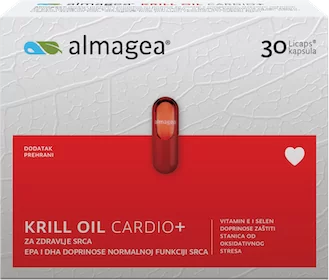
Omega-3 fatty acids are necessary for the normal functioning of the whole organism.
23.97 €

Get to know us
Dietary supplements
Information
Let's connect
© 2024. Almagea d.o.o., Ulica Julija Knifera 4, 10 020 Zagreb
Fixed conversion rate: €1 = HRK 7.5345
kupuj brzo i sigurno