

Curcumin and allergies - the scientific basis of a natural solution
 LIFESTYLE
  5 MIN
5 MIN  ALMAGEA
  16.02.2026
LIFESTYLE 5 MIN ALMAGEA 16.02.2026
With the spring season comes sunny days, but for many also inevitable allergies. Sneezing, itching, runny nose, watery eyes and feeling tired are just some of the symptoms that make everyday life difficult for people sensitive to pollen, dust, mites or certain foods.
During the last decades, the frequency of respiratory allergic diseases has increased dramatically. Bronchial asthma and allergic rhinitis have become the most common chronic diseases in children. This sudden increase is most pronounced in Western countries.
And while drugs such as antihistamines and corticosteroids relieve symptoms, more and more attention is paid to substances that can affect the very cause of the allergic reaction and inflammation.
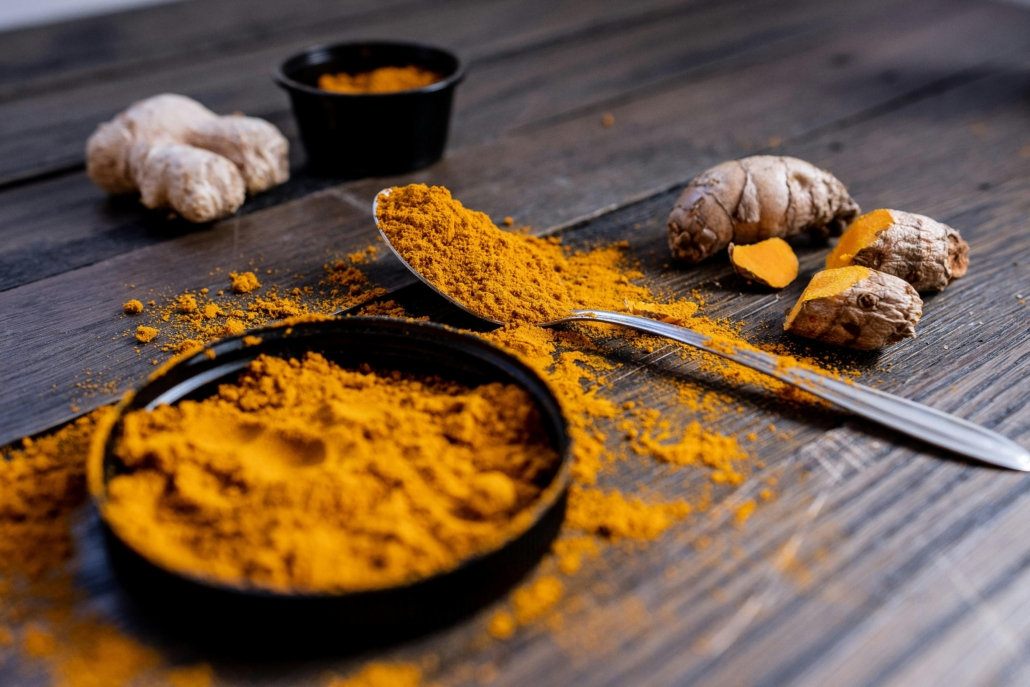
In the last ten years, scientists have increasingly investigated the influence of curcumin as a powerful regulator of the immune system that can play a key role in the control of allergies. It is believed that its action is not limited to alleviating symptoms, but also targets the key immune processes that cause allergic reactions.
Allergies are based on an overreaction of the immune system, most often through a Th2-dominant immune response, which results in increased secretion of IgE antibodies, activation of mast cells (cells of the immune system involved in allergic reactions), release of histamine, inflammation, eosinophilia (one of the main causes of mucosal damage in allergies and asthma) and typical symptoms such as sneezing, itching and difficulty breathing.
Curcumin, a bioactive substance from turmeric, has shown multiple biological effects in scientific research that are of interest in the context of supporting the normal function of the immune system:
It has been shown that it can affect the release of histamine from mast cells, which is being investigated in the context of hypersensitivity reactions.
• It can modulate the synthesis of immunoglobulin IgE, thus testing its potential in regulating the immune response.
• Research shows its effect on the reduction of eosinophils - cells that participate in inflammatory processes.
• Its influence on the expression of molecules associated with Th2 cells, which are involved in certain immune pathways, is being examined.
• It can influence the regulation of cytokines such as IL-4, IL-5 and IL-13 – important in mediating immune responses.
• Effects on pulmonary inflammation and bronchial hyperreactivity have been observed in animal models.
In in vivo models of allergy in mice, oral administration of curcumin is associated with changes such as reduced IgE levels, fewer eosinophils, and reduced activity of genes and cytokines associated with inflammation. These results suggest a potential role for curcumin in supporting the immune system in certain challenges, but further clinical studies in humans are needed to confirm its efficacy and safety in these contexts.
Recorded results suggest that curcumin can represent additional support for a balanced immune response, especially in periods of seasonal challenges, but it does not replace standard therapies and its use should be in accordance with the recommendations of health professionals.

As with many natural substances, the problem with curcumin lies in its low bioavailability – in its standard form, the body absorbs it poorly and quickly eliminates it. This is where Almagea® CURCUMIN FORTE+ comes into play, a food supplement that uses NovaSOL® technology: curcumin in the form of solubilized micelles that dissolve in water, which achieves up to 185 times greater absorption than ordinary curcumin. One capsule of CURCUMIN FORTE+ contains as much as 34.9 mg of curcuminoids and 10 μg of vitamin D3 (200% of the recommended daily intake). Vitamin D contributes to the normal function of the immune response, the role of which in the body is twofold, and includes stimulating the defense when it is too weak, but also alleviating an excessive immune response, such as that in allergies. Studies link vitamin D deficiency to a higher incidence of asthma, rhinitis and atopy, especially in urban areas and during the winter months.
In combination with curcumin, vitamin D in CURCUMIN FORTE+ works synergistically – providing the body with double protection: immune modulation and inflammation control. With an advanced formulation such as Almagea® CURCUMIN FORTE+, it is possible to provide effective support to the body - internally and in the long term.
Literature:
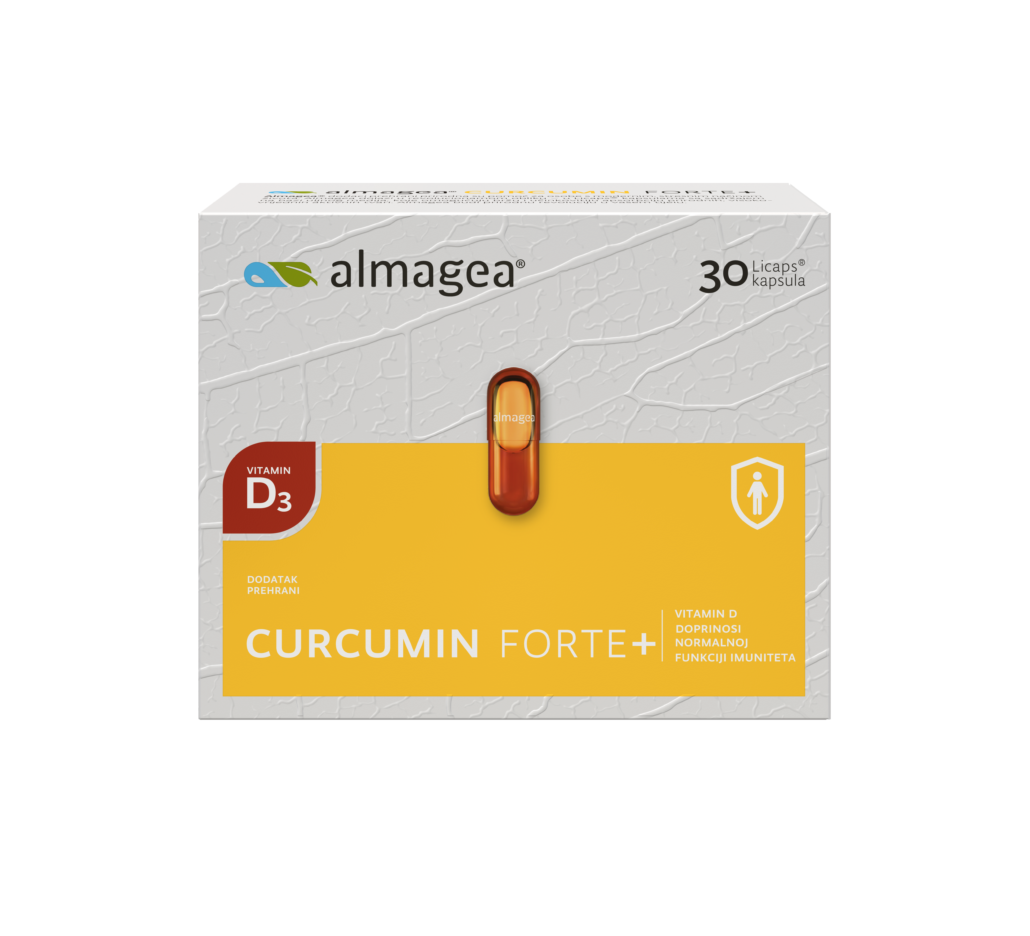
Maintaining the body's defense resistance with the power of curcumin and vitamin D.
22.47 €

Get to know us
Dietary supplements
Information
Let's connect
© 2024. Almagea d.o.o., Ulica Julija Knifera 4, 10 020 Zagreb
Fixed conversion rate: €1 = HRK 7.5345
kupuj brzo i sigurno 